An inspector does not ask whether your buses have cameras. They ask how many channels, where each one points, how many days of footage you keep, and whether anyone can pull a clip from last Tuesday in under five minutes. That is the difference between a dash cam and a camera system that passes.
What a camera fit-out actually includes
A single windscreen camera covers a private car. A vehicle working under an authority or a client contract usually needs several views recorded together, on one timeline, with the location and speed attached to every frame.
- Road-facing camera
The view ahead in HD, for collisions, insurance claims and traffic disputes. The one camera every fit-out starts with.
- Driver-facing camera
The cab, for fatigue, phone use and seat-belt checks on long routes. Required on most passenger-transport specs.
- Passenger cabin cameras
One or more views down the aisle of a bus or Coaster, for pilgrim, school and staff transport.
- Side, rear and reversing
Blind-spot and rear views with a cab monitor, for trucks, tippers, tankers and municipal vehicles that reverse in tight yards.
- MDVR recorder
A 4- or 8-channel mobile DVR, shock-mounted, recording every camera to SD or HDD inside the vehicle.
- GPS and 4G link
Every clip carries time, place and speed, and event clips upload automatically so you are not waiting for the vehicle to come back.
Cameras by sector, and who asks for them
What you must fit depends on the authority you answer to and the contract you signed. These are the vehicle types we are asked about most in the Kingdom:
| Vehicle | Usual camera brief |
|---|---|
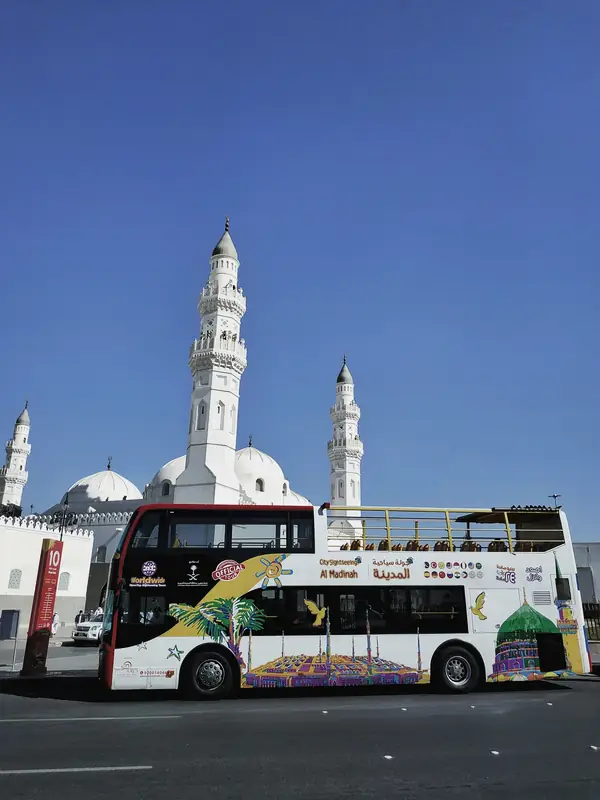
| Hajj, Umrah and intercity buses | Road, driver and cabin views recorded together, retained for a set number of days, alongside the Wasl and Transport General Authority link on the same vehicle. |
| School and staff transport | Cabin coverage of every row plus the door, and a road camera. Operators are usually asked to produce footage of a specific trip on request. |
| Municipal and waste contracts | Rear and side views with an in-cab monitor for reversing, and a road camera for route and service proof. |
| Heavy trucks and tankers | Road and driver cameras, often with ADAS and fatigue detection, and blind-spot cameras on long trailers. |
| Rental and corporate cars | A single road camera, or a tracker with dash cam when the point is evidence rather than compliance. |
Channel counts, retention periods and camera positions differ between authorities, contracts and vehicle classes, and they change. Send us the camera clause from your contract or tender and we quote hardware against it in writing. If you do not have it on paper yet, we will tell you exactly what to ask for before you buy anything.
Channels, storage and getting footage out
The MDVR records continuously to storage inside the vehicle. How far back you can go depends on channel count, resolution and disk size, so we size it to the number of days you have to keep, not to the cheapest card.
- Event clips upload over 4G on impact, harsh braking or a panic press.
- Request footage for any vehicle, date and time from the platform.
- Download a clip with time, GPS position and speed stamped on it.
- Live view into any camera on a working vehicle when you need to see now.
AI that watches the road and the driver
Recording tells you what happened yesterday. ADAS and driver-monitoring turn the same cameras into a warning today: lane departure and forward-collision alerts from the road camera, and eyes-closed, yawning, smoking or phone-to-ear detection from the driver camera, with an in-cab voice warning the moment it triggers. Each event is saved as a short clip, so a transport manager reviews ten flagged minutes instead of ten hours of video.
Camera events sit next to trips, speeding and idling in the same platform as our vehicle tracking, so a harsh-braking alert and the clip that explains it are one click apart.
Fitting, calibration and handover
- Survey one vehicleWe look at the actual bus, truck or car, agree camera positions against your specification, and confirm the recorder and storage.
- Fit the fleet at your yardOur technicians install vehicle by vehicle around your shifts, hard-wired and concealed, with the recorder in a protected position.
- Test, document, hand overEvery channel checked on camera, a test clip pulled from the platform, and your team trained on retrieving footage. Serial numbers and fitted positions documented for your compliance file.
Vehicles that also need a government link can be fitted in the same visit as Wasl platform integration and Transport Authority linking, so one technician visit covers both. Tell us what you run and which specification applies, and we will come back with camera positions and a price per vehicle.